Most broadcasters obsess over content while completely ignoring the space they record in — and it shows. A substandard studio quietly destroys audio quality, kills production credibility, and forces expensive reshoots that drain budgets fast. Professional broadcasting studio hire is not simply renting a room with microphones; it demands soundproofing, broadcast-grade equipment, and bulletproof internet connectivity working together. The wrong booking decision costs far more than money. Everything you need to compare, evaluate, and negotiate before signing anything is laid out ahead.
What Broadcasting Studio Hire Setup Do You Actually Need?
Choosing the right studio hire setup depends on the type of broadcast you’re producing. A news segment needs different equipment than a live event or corporate webinar. Knowing your format helps you avoid overspending on gear you won’t use.
The right studio hire setup starts with knowing your format — match your gear to your broadcast, not your budget.
Most professional setups include:
- Cameras with autofocus and low-light capability
- Tripods with fluid heads for smooth movement
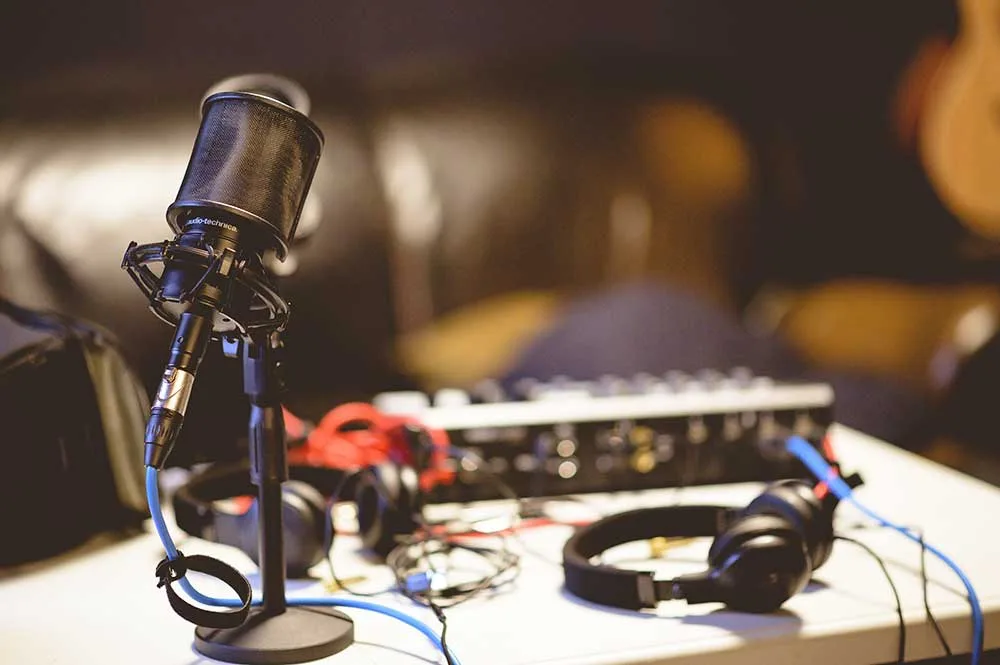
- Professional audio gear including condenser microphones and audio mixers
- Lighting systems with key, fill, and background lights
- Video switchers and live stream encoders
You don’t need every piece of equipment for every production. Start with your core requirements, then scale up. For multi-camera productions, RAID architecture implementation protects your recorded footage against data loss if a single hard drive fails.
A well-matched studio hire setup gives your team the right tools to deliver a great result without unnecessary complexity. Stable high-speed internet is also a fundamental requirement when live streaming is part of your production workflow.
Broadcasting Studio Hire Pricing: Hourly Rates, Minimums, and Hidden Costs
Broadcasting studio hire pricing varies widely, and grasping the cost structure helps you plan your budget accurately. Hourly rates typically range from $25 to $200, depending on studio quality and available equipment.
Here’s what you’ll commonly encounter:
- Basic home-based studios: from $25 per hour
- Podcast studios: $40–$100 per hour
- Top-tier professional studios: up to $200 per hour
Minimum booking requirements also affect your total cost. Many studios charge higher rates for sessions under three hours. Day rates, like $280 for eight hours, offer better value for longer sessions. Professional studios designed for broadcast work often feature acoustic foam treatment installed across walls and corners to control reverberation and deliver cleaner recordings.
Watch for hidden costs too. Finalising fees range from $99 to $299. Engineer add-ons, mobile recording setup fees, and overdubbing charges can notably increase your final bill. Some studios also offer audio post-production services such as dialogue editing, sound design, and ADR that may be billed separately from your base studio rate. Always request a full cost breakdown before confirming your studio booking.
What Equipment Standards Separate Broadcast-Quality Studios From the Rest
Not every studio that calls itself “broadcast-quality” actually meets the standard. You need to know what separates professional spaces from the rest before you book.
Real broadcast equipment makes the difference. Look for these essentials:
- Microphones: Shure SM7B, Electro-Voice RE20, or Rode Procaster
- Audio interfaces: Focusrite 2i2 or 18i8 for clean signal conversion
- Monitors: Genelec 8010A or JBL LSR305 for accurate playback
- Video capture: HDMI to USB-C cards for streaming and recording
- Acoustic treatment: Panels that reduce reflections and standing waves
Studios meeting these standards give you clean audio, sharp visuals, and reliable infrastructure. You belong in a space built for professionals. Settling for less costs you credibility and production quality. A studio built for longevity will also use 4K-ready infrastructure such as 12G-SDI cabling, so your production scales to Ultra HD without costly rewiring down the line. Professional studios also depend on master control room setup to aggregate signals from cameras, microphones, and graphics into a single, managed broadcast output.
How to Book Broadcasting Studio Hire in Four Simple Steps
Once you know what equipment standards a studio must meet, you’re ready to act on that knowledge and secure the right space.
Booking a professional studio follows a clear four-step process.
- Determine your needs: Identify your project type, group size, and space requirements between 1,000–2,600 sq ft.
- Research studios: Verify soundproofing, equipment lists, and on-site engineer availability on platforms like Giggster or Peerspace.
- Check policies: Confirm minimum bookings of 2–3 hours, cancellation rules, and overtime charges.
- Book your session: Use online calendars to reserve slots, select packages with WiFi and snacks, and confirm all accommodations.
Hourly rates range from $100–$155. Discounts apply for 8+ hour bookings.
Monthly memberships offer cost-effective recurring options for your community’s ongoing broadcasting needs. Professional studios managing complex sessions often rely on digital matrix processors to control multiple independent audio zones simultaneously, ensuring clean, consistent sound throughout the facility. Some platforms offer instant image creation upon client request as part of their studio services.
Why Audio Africa Is the Right Broadcasting Studio Hire for Your Project
Many broadcasting projects fail not because of poor content, but because of inadequate infrastructure. You need a partner who grasps this reality.
Audio Africa supplies professional-grade broadcast equipment across South Africa. They serve television networks, radio stations, corporate boardrooms, and live event producers. Their installations span master control rooms, outside broadcast vehicles, and acoustic treatment solutions for studios that demand zero-failure performance.
Their Pretoria North base positions them well for national delivery. You’re not working with a general A/V reseller. You’re working with specialists who supply high-end audio and visual hardware built for broadcast environments.
When you choose Audio Africa, you join a community of professionals who demand reliability. Your project deserves infrastructure that performs consistently. Audio Africa delivers the equipment, support, and technical know-how that serious broadcasting requires. South Africa’s broadcasting landscape is vast, with the SABC alone commanding 75% of the country’s radio listening audience share. That’s a great result for any production.