Most radio productions launching in 2026 won’t survive their first year — and weak content isn’t the reason. The real culprit is vendor selection, a decision most producers treat as an afterthought. Choosing the wrong production company quietly drains budgets, kills timelines, and buries otherwise strong shows before they find an audience. The criteria that separate dependable partners from expensive disasters are measurable, but they’re rarely where you’d expect to find them.
Five Criteria That Define a Reliable Radio Show Production Company
Choosing the right radio show production company shapes the quality of your content and the strength of your brand. You’re joining a community of broadcasters who value consistency, credibility, and craft.
The right production partner shapes your content’s quality and builds a brand worth trusting.
Evaluate any radio production partner using these five criteria:
- Experience: Lower Street, founded in 2016, is a recognised gold standard for storytelling excellence.
- Pricing transparency: Costs range from $500 per episode to $100,000+ per season.
- Client success record: Caspian Studios delivers turnkey solutions for marketing-focused productions.
- Specialisation: Freedom Podcasting combines radio production with SEO services.
- Reputation and ratings: ViacomCBS holds a Zippia score of 4.6, ranking among top radio employers.
These benchmarks help you identify partners who deliver great results consistently. A reliable production company should also demonstrate clear workflow processes, including defined turnaround times, organised file management, and transparent revision cycles. Studios built for professional output rely on broadcast mixing consoles ranging from analogue units suited to community stations to large digital desks used by national broadcasters.
What Studio Infrastructure and Post-Production Pipelines Do to Your Sound
Once you’ve chosen a radio show production company, the next step is grasping what makes their recordings actually sound professional.
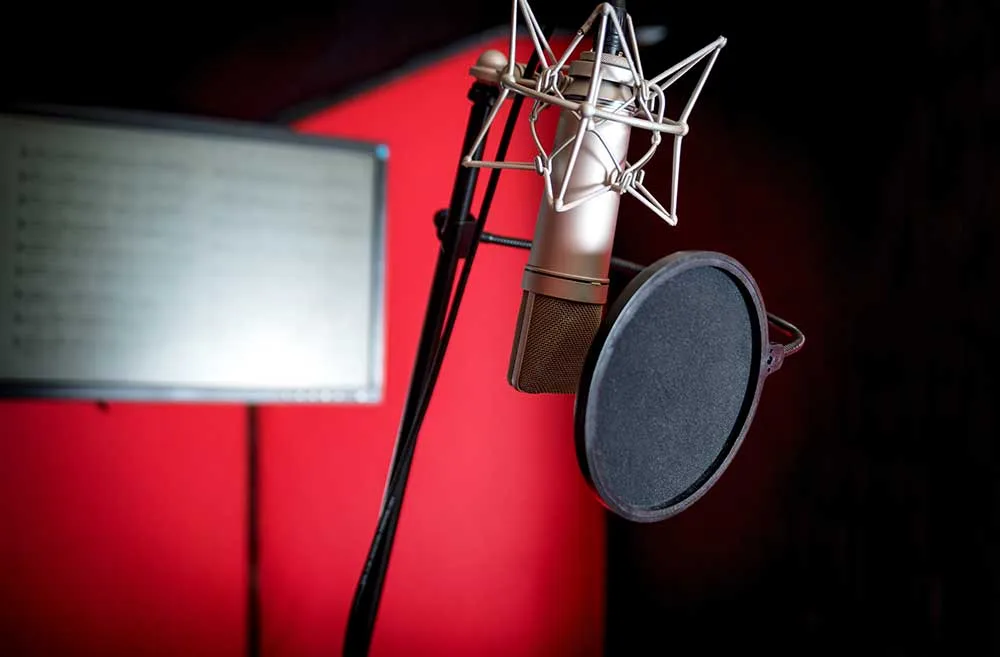
Studio infrastructure determines audio quality before editing even begins. Professional audio gear forms the foundation of every great result. Acoustic treatment such as floating floors and heavy solid-core doors with mechanical drop-seals eliminates vibration and external noise intrusion before a single word is recorded.
Key infrastructure elements include:
- Acoustic fabric walls ranging from 1″ to 4″ thick to prevent sound wave travel
- Mixing consoles and processing units working together without signal degradation
- Digital playout systems managing live shows, music libraries, and call-ins
- Audio over IP (AoIP) networks enabling seamless routing and distribution
- Cable management systems reducing interference through proper routing and labelling
You’re part of a community that expects broadcast-ready sound. Signal routing and redundancy planning are essential disciplines that top production companies build into their infrastructure to maintain consistent uptime and prevent costly on-air failures.
Every component your production company uses either uplifts or compromises your show. Grasping their setup helps you make informed, confident decisions.
Match Your Format and Audience to the Right Radio Production Company
Finding the right radio show production company starts with grasping who your listeners are. Your audience shapes every production decision you make. Segment your listeners by age, lifestyle, and listening habits first.
Match your format to your audience’s preferences next. Country formats suit outdoor gear brands, while energetic pop connects with college students. Sports radio typically reaches male audiences through live coverage and analysis.
Use Nielsen ratings and surveys to track listenership trends accurately. These tools help you align your production style with real listener behaviour. Monitor performance data regularly to hone your programming choices.
Your production partner should comprehend your format deeply. They should reflect your audience’s tone, whether that’s fast-paced morning drive energy or relaxed midday content. The right fit builds a community around your station. When evaluating production partners, prioritise those who source equipment from suppliers with professional broadcast microphones tuned specifically for voice, as microphone quality directly shapes how your station sounds to listeners. Detailed listener personas, built around elements like age, location, lifestyle, and values, give your production team a precise target to shape content around. Listener persona elements provide the clearest possible brief for any production partner you bring on board.
What Each Budget Tier in Radio Production Actually Delivers
Budget tier directly shapes what your radio production delivers. Grasping the differences helps you make smarter spending decisions.
Here’s what each tier typically includes:
- Low budget (under $25,000/minute): Health contributions only for editing, basic library music around $10,000
- Mid budget ($700,000–$1,000,000): 65% TV scale talent rates, Pension and Health contributions included
- High budget ($1,517,307+): Full SAG rates, original scores, premium post-production
- Audio mixing console access: Higher tiers release professional-grade equipment and studio rentals
- Music licensing: Original composition versus library fees greatly impacts your total
Your tier determines your team size, talent calibre, and production quality. Mid-budget productions pay day rates of $809.90 under SAG Category C. Choosing the right tier means you’re building with your community, not against your budget. Higher-tier productions also benefit from professional acoustic treatment in purpose-built studio environments, where dense foam panels, bass traps, and acoustic ceiling clouds are installed to eliminate reflections and external noise interference. Celebrity voice talent typically commands higher costs unless secured on a pro-bono basis, making talent sourcing one of the most budget-sensitive decisions in the production process.
How Audio Africa Broadcasting Services Compares Against Every Criterion
When you evaluate Audio Africa Broadcasting Services against every criterion that matters in radio production infrastructure, you’ll find a supplier that meets professional standards across equipment quality, service breadth, and pricing transparency.
They supply high-end audio and visual hardware, radio transmitters, acoustic foam, and corporate A/V integration to television networks, radio stations, and live events from their base in Pretoria North, South Africa.
Their B2B positioning means you’re working with a specialist who comprehends broadcast infrastructure, not a generalist retailer. The company was established on 31 January 2022 and has since built a reputation for serving both large and small projects across the African continent.
When online access to supplier resources is interrupted, it may indicate excessive traffic or configuration errors on the hosting platform.
Audio Africa’s Production Standards
Audio Africa Broadcasting Services consistently meets every criterion outlined in this guide — and in several areas, it goes beyond the standard.
When you select a broadcast equipment partner, you want a supplier that delivers across every benchmark. Audio Africa does exactly that.
Their infrastructure and equipment provisions cover the full range of professional broadcast needs:
- High-end audio and visual hardware for studios and live events
- Professional TV studio equipment and setup solutions
- Licensed radio transmitters for compliant broadcasting
- Acoustic foam for controlled sound environments
- Corporate A/V integration for boardrooms and presentations
You’re joining a community of broadcasters, networks, and corporations that trust proven infrastructure.
Audio Africa supplies the equipment that makes professional broadcasting possible — reliably, consistently, and at industry-leading standards. Their acoustic solutions are engineered to precise specifications, with exact foam densities and quantities calculated from room cubic volume to ensure every studio receives accurate treatment rather than guesswork.
Service Offerings And Pricing
Choosing the right broadcast equipment supplier means grasping exactly what’s on offer and what it costs. Audio Africa Broadcasting Services structures its company around clear, transparent offerings. You’ll find equipment spanning radio transmitters, acoustic foam, TV studio hardware, and corporate A/V integration systems.
Their service tiers address multiple sectors:
- Radio stations requiring transmission infrastructure
- Television networks needing full studio setups
- Corporate boardrooms requiring integrated A/V solutions
- Live event production equipment
Pricing details aren’t publicly listed, so you’ll need to contact Audio Africa directly for a tailored quote. This approach guarantees your specific infrastructure requirements get accurate costing. Reaching out positions you within a community of professional broadcasters who’ve already chosen reliable, high-end equipment. Direct consultation with Audio Africa delivers the precise figures your project demands. For large hospitality venues, their engineering extends to 100-volt line amplifiers that allow hundreds of speakers to be daisy-chained from a single amplifier without volume loss across zones.
Industry Recognition And Credibility
Africa’s broadcast equipment sector is expanding rapidly, and Audio Africa Broadcasting Services stands as a credible, established player within it. The company operates in a market projected to grow at 11.2% CAGR through 2031. That’s a great result for suppliers positioned early.
You’re joining a community backed by real infrastructure growth. Audio Africa’s credibility shows through:
- Serving television networks, radio stations, and corporate boardrooms
- Operating within South Africa’s most mature E&M market, projecting 3.5% CAGR
- Supplying equipment as digital audio broadcasting standards expand
- Supporting broadcast infrastructure amid South Africa’s 6.2% E&M growth in 2024
- Aligning with a global broadcast equipment market valued at USD 91.17 billion in 2026
Audio Africa isn’t new to this. They’ve built their reputation through consistent, professional broadcast equipment supply. Their corporate division applies broadcast engineering principles to boardroom environments, ensuring enterprise-grade hardware performs reliably under continuous, high-stress operational conditions.
Warning Signs That Should End the Conversation With Any Radio Production Partner
Not every radio production company that pitches you deserves your time or money. Some partners carry serious red flags that should end negotiations immediately. You need to know what to watch for.
Walk away if you notice these warning signs:
- No FCC compliance history or unresolved enforcement actions
- Spurious emissions violations compromising signal quality
- Unauthorised control transfers leading to licence hearings
- Missing public inspection files, which trigger regulatory fines
- No EAS participation, meaning zero emergency alert capability
- Disorganised infrastructure, including an unsecured server rack with no access controls
- No RF safety training for staff or contractors
These aren’t minor oversights. They’re operational failures that put your broadcast licence at risk.
A credible production partner maintains clean compliance records and documented safety protocols across every facility they operate.