Most broadcasters covering live events across Africa are doing it wrong—and they don’t even know it. Satellite uplinks, outside-broadcast trucks, and CDN-backed streams each promise reliable reach across 54 countries and 1.4 billion viewers, but choosing the wrong setup doesn’t just hurt your signal. It destroys your entire broadcast. The real variables—cost, latency, and terrain—separate successful live coverage from catastrophic failure, and most guides won’t tell you what actually matters.
What Does Live TV Event Coverage in Africa Actually Look Like?
Live TV event coverage in Africa spans a wide range of platforms, broadcasters, and formats. You’ll find everything from 24/7 news networks to regional live streaming services. Africanews, for example, delivers round-the-clock coverage focused on African and international stories.
Sports coverage is equally strong. SuperSport is sub-Saharan Africa’s largest sports broadcaster, airing major events across dedicated channels. ESPN Africa also serves key markets like Rwanda.
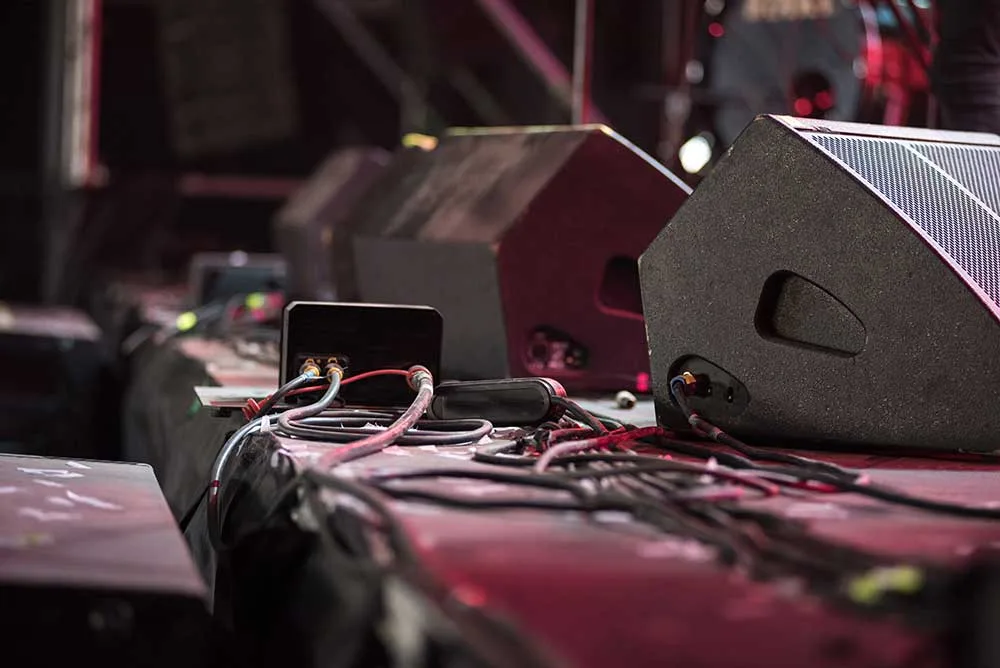
Your regional options are just as broad. Squid TV aggregates live streams from national and community broadcasters, including Citizen TV, SABC, and Newzroom Afrika. TV remains a primary information source, reaching 60.3% of audiences. Social media complements this at 43.6%. Together, these platforms create a connected broadcast ecosystem you’re genuinely part of. Major live events often rely on outside broadcast vehicles built into rugged trucks with shock-mounted server racks to capture and transmit HD video across remote, infrastructure-free terrain. Africanews approaches its reporting as a pan-African media organisation, covering global and business stories specifically from an African perspective.
The Channels Broadcasting African Events Around the Clock
Across Africa, several broadcasters run 24/7 channels dedicated to keeping audiences informed and entertained around the clock. These channels give you the paramount access to African events, news, and culture continuously.
| Channel | Coverage Area | Availability |
|---|---|---|
| Channel Africa | Pan-African | DSTV 802, satellite |
| Africanews | 33 sub-Saharan countries | TV, online, DTT |
| The Africa Channel | North America, Caribbean | Comcast, Cable |
| Channels Television | Nigeria | YouTube, social media |
| Africanews UK | United Kingdom | Freeview 271 |
Each broadcaster serves a distinct community. Africanews reaches 7.3 million homes via satellite. Channel Africa broadcasts in six languages, including French, Portuguese, and Kiswahili. You’re part of a connected audience that spans continents, sharing African stories through reliable, round-the-clock broadcasting infrastructure. Behind each of these channels lies a carefully engineered broadcast infrastructure system that depends on zero-failure hardware to ensure live signals never drop for audiences across the continent. Africanews airs news and weather summaries every half-hour, keeping viewers continuously updated throughout the day and overnight.
Why Satellite Still Dominates Live TV Distribution Across Africa
When you look at how live TV reaches millions of African viewers, satellite technology stands out as the clear leader in distribution.
Infrastructure gaps across rural and remote regions make terrestrial broadband unreliable, so satellite bypasses these limitations entirely to deliver consistent, high-quality signals.
Intelsat 20, positioned at 68.5°E, powers this distribution by carrying major broadcast signals to Direct-to-Home (DTH) subscribers, supporting services like MultiChoice DStv’s 8 million active households across Sub-Saharan Africa. To further strengthen reliability, MultiChoice has invested heavily in backup capacity, with collocated satellites such as IS-36 alongside IS-20 providing in-orbit protection against service disruption.
Outside broadcast vehicles deployed at live event locations rely on portable satellite uplinks and digital encoders to feed compressed signals directly into this distribution chain, ensuring real-time transmission from even the most remote venues back to master control rooms.
Satellite’s Unmatched Coverage Range
Most of Africa lacks the dense terrestrial infrastructure that Europe or North America relies on for broadcast distribution. Satellite solves this by covering entire regions from a single orbital position. That’s why every major live event reaches millions of viewers simultaneously.
| Satellite | Band | Coverage Area |
|---|---|---|
| NSS-12 | Ku-band | East Africa |
| Arabsat-5C | C-band | Pan-Africa |
| AfricaSat 1A | C-band | All Africa |
| Eutelsat E21B | Ku-band | West Africa |
| Eutelsat E70B | Ku-band | East Africa |
You’re part of a broadcasting community that depends on reliable reach. Over 600 TV stations use satellite distribution today. With 75 million TV households across Africa, satellites deliver your event signal where terrestrial networks simply can’t follow. Sourcing the right satellite uplink equipment from globally trusted manufacturers ensures that your transmission chain remains stable and uninterrupted from the point of origin to the satellite itself. MultiChoice DStv recorded over 6 million paid subscribers across sub-Saharan Africa as of September 2016, illustrating the scale of audience that satellite platforms can deliver for live events.
Infrastructure Gaps Drive Satellite Demand
Africa’s terrestrial broadcast infrastructure simply can’t keep up with demand. Fibre networks concentrate around capital cities, leaving rural communities disconnected. Copper networks can’t handle surging video traffic, and laying new terrestrial lines costs billions annually.
You’re part of a continent facing an estimated $90–100 billion annual infrastructure funding gap. That gap makes satellite coverage not just useful but essential. When subsea cables like SEACOM failed in May 2024, entire regions lost connectivity overnight.
Satellite bypasses these vulnerabilities entirely. LEO satellites deploy quickly across Africa’s 11.7 million square miles, reaching communities where terrestrial infrastructure isn’t economically viable. Less than 50% broadband penetration creates enormous demand for alternatives. Satellite fills that gap, providing reliable live TV coverage to audiences that terrestrial networks simply can’t reach. Large-scale live event broadcasts further depend on enterprise-grade AV infrastructure to ensure signal integrity from the venue to the uplink point without distortion or dropout. Landlocked nations face an additional layer of vulnerability, remaining entirely dependent on neighbouring coastal countries for international fibre access, making transit dependency a compounding risk to broadcast continuity across the continent.
Intelsat 20 Power Distribution
Positioned at 68.5° East longitude, Intelsat 20 (IS-20) is the backbone of live TV distribution across Africa. It carries 24 C-band, 54 Ku-band, and 1 Ka-band transponders, reaching nearly 45 million viewers across the continent. You’re part of a broadcast community that depends on this infrastructure daily.
IS-20 distributes 552 channels, including 50 in HD and approximately 192 free-to-air channels. It’s rightfully called “Africa’s leading direct-to-home video neighbourhood.” That’s a great result for programmers targeting diverse audiences across multiple regions.
Your broadcast equipment must align with this satellite’s technical demands to deliver reliable live coverage. IS-20 supports video, voice, and broadband services, making it the most dependable distribution platform available. For live events, that reliability isn’t optional — it’s essential. On the ground, that signal chain extends into corporate venues and convention centres through dedicated hardware video encoders that compress high-bandwidth video for distribution to internal networks or public platforms without dropped frames or buffering.
Stream or Satellite: Which Access Method Works Best for You?
When planning live TV event coverage in Africa, you’ll need to weigh up two primary distribution methods: satellite and streaming. Both options carry distinct advantages depending on your audience’s location and your budget.
Satellite reaches across sub-Saharan Africa, covering up to 40 million households, including remote regions without reliable internet. It delivers higher uptime where data connectivity is poor. However, you’ll face high monthly costs, long-term contracts, and weather-related signal interruptions.
Satellite covers up to 40 million households across sub-Saharan Africa, reaching remote regions where internet connectivity remains unreliable.
Streaming suits urban, internet-connected audiences and supports SD, HD, and 4K quality. Your costs stay lower initially, but CDN expenses scale with viewer numbers. For large-scale live events, dedicated hardware encoders compress mixed video and audio feeds into reliable internet streams without depending on software-based solutions.
Consider these key factors:
- Audience location: rural vs. urban
- Budget: one-time hardware vs. ongoing data costs
- Reach: established satellite base vs. growing streaming audience
Watch Live African Events Free on AVO TV and Beyond
You can watch live African events for free on AVO TV, a platform that streams over 120 channels without requiring a subscription or payment.
Top African channels like AIT, Channels TV, and Silverbird deliver news, entertainment, and cultural programming across mobile, tablet, Smart TV, and Android TV devices.
AVO TV reaches over 20 million viewers globally, making it one of the most accessible free streaming options for live African content today.
Behind the scenes, broadcast crews covering live outdoor events across Africa rely on heavy-duty microphone windshields to protect audio quality from wind interference and environmental noise during live transmissions.
Free Streaming Via AVO
AVO TV stands out as Africa’s leading free-to-air streaming platform, giving viewers access to over 120 channels at no cost.
You don’t need a subscription or payment to start watching. This makes it a great result for African audiences seeking affordable live event coverage.
You can stream on mobile devices, tablets, Smart TVs, and Roku players. The platform reaches over 20 million viewers globally, proving you’re part of a large, connected community.
Key features you’ll appreciate include:
- 100+ African channels covering news, sports, and entertainment
- Data Save Mode for reduced bandwidth usage
- Satellite delivery via Intelsat 20 at 68.5 degrees east, serving Sub-Saharan Africa
Registration requires only your email address, and only for on-demand content.
Top African Live Channels
Africa’s live-channel terrain has expanded dramatically, giving viewers free access to major broadcasts across news, sports, and entertainment. You’re now part of a connected community that watches together across borders and languages.
Here are four platforms providing that experience:
- Commec TV – African and international content with low data consumption
- UVOtv – Multi-regional channels on Samsung, LG, Roku, Apple TV, and Android
- Africanews – 24/7 news from an African viewpoint across sub-Saharan Africa
- Squid TV – National, regional, and community broadcasters in one location
Broadcasters supplying these channels rely on professional audio gear to maintain transmission quality. Audio Africa supplies that infrastructure.
You benefit every time a signal reaches you cleanly and without interruption.
How to Connect Your TV or Device to Live African Channels
Getting live African channels on your TV or device is straightforward once you know your options. Each platform serves a different setup, so pick what fits your situation.
Watching live African channels is easier than you think — you just need to know where to look.
Streaming apps:
- UVOtv supports Samsung, LG, Roku, Apple TV, iOS, and Android
- AVO TV works on mobile, tablet, Smart TV, and satellite
- AFRICA BOX TV runs on Android, PC, and Smart TV via WiFi, 3G, or 4G
Satellite setup: Point your dish at 68.5 degrees east (Intelsat 20), then rescan your set-top box to lock the signal.
Smart TV: Search your app store, download, and sign in.
Just as an audio mixing console connects sound sources into one clear output, these platforms connect you to your community’s stories, sports, and events from anywhere.
Watch Every Major African Event Across All Your Devices
Whether you’re watching on a phone, tablet, Smart TV, or PC, the right app puts every major African event in front of you. Multi-device compatibility means you never miss a moment, regardless of your location or device.
These four apps deliver reliable access across your devices:
- AVO TV – Available on mobile, tablet, Smart TV, satellite, and streaming devices.
- AFRICA BOX TV – Compatible with Android phones, tablets, PCs, and Smart TVs.
- OyaWatch – Streams 120+ channels anywhere, anytime across multiple devices.
- Demand Africa – Supported on web and all major platforms worldwide.
Each app connects you to the African content your community values. You belong to over 20 million global viewers already watching together.